
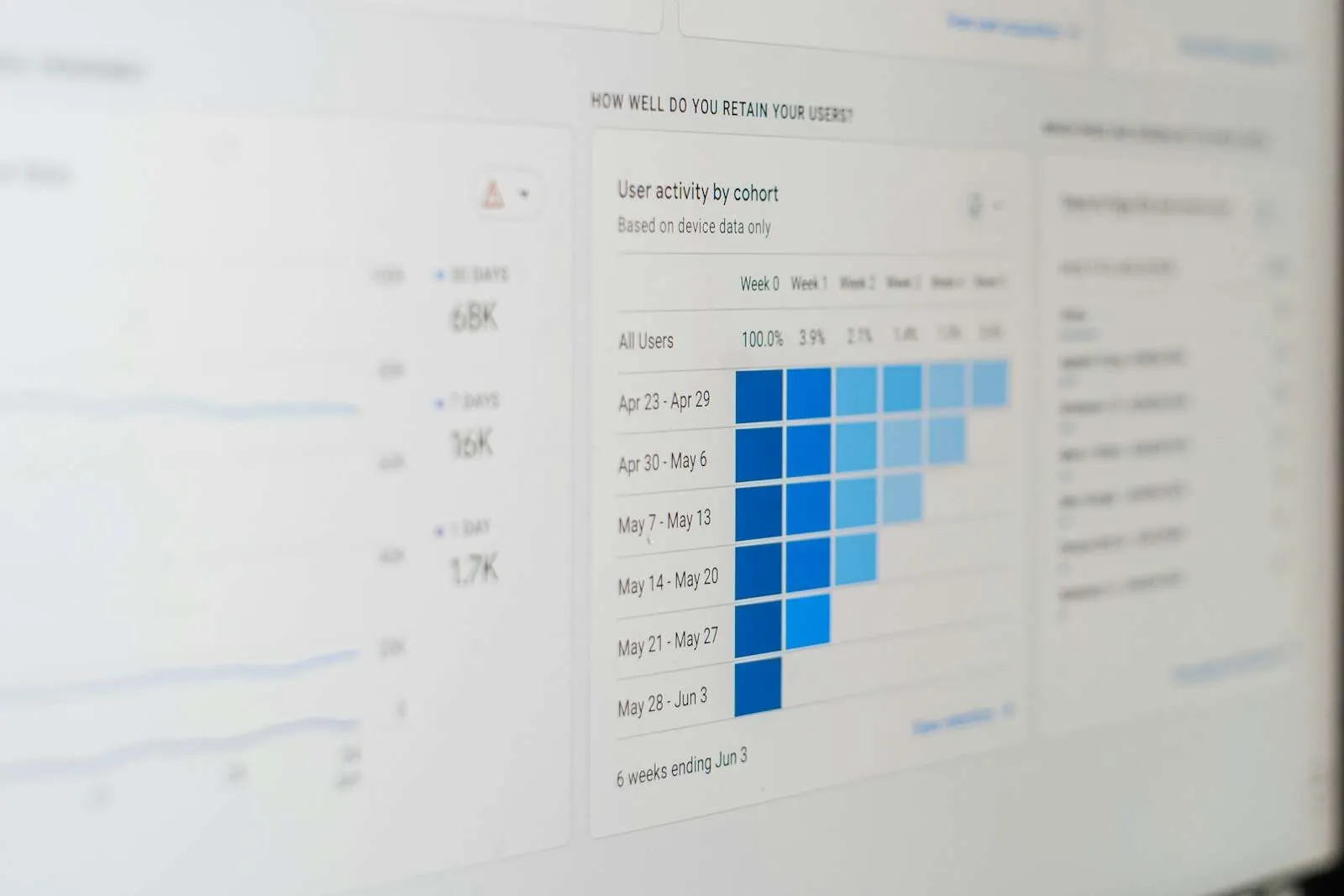

Classic SEO reporting still matters, but it does not see whether ChatGPT named you, whether Perplexity cited your case study, or whether Google AI Overviews referenced your content. This is the final post in our four-week AI Search 2026 series. Below is the practical measurement framework we use for BrisTechTonic itself and for AEO retainer clients, with worked examples from our own numbers.
Why Google Search Console alone is not enough in 2026
Google Search Console reports on clicks and impressions inside Google's classic organic results. It does not see AI Overview citations of your content beyond the impression when your page is a source, it does not see ChatGPT or Claude citing you, and it does not see Perplexity linking to your case study. In an AI search world where 40% of answered queries never generate a click at all (per Advanced Web Ranking's July 2026 SERP tracking), GSC alone measures a shrinking share of the actual visibility you are earning.
The fix is not to abandon GSC. It is to add three more views on top of it. Together they form a scorecard that captures both classic SEO performance and AEO performance, and lets you see them moving relative to each other over time.
The 4 AEO metrics that matter in 2026
The scorecard below is what we run monthly for AEO retainer clients and quarterly for classic SEO retainers.
| Metric | Source | Target trend | Read as |
|---|---|---|---|
| Classic organic performance | Google Search Console | Stable or up | Lagging, captures what already happened |
| AI citation score (out of 40) | Manual query testing, weekly | Up week over week | Leading, earliest signal AEO work is landing |
| AI referrer traffic | GA4 sessions from claude.ai, perplexity.ai, chat.openai.com | Up month over month | Leading, real-user validation |
| Brand search trend | Google Search Console, brand-name queries | Up quarter over quarter | Lagging, the compound result |
Why 4 metrics, not 1
Any single metric can move for reasons unrelated to your AEO work. AI referrer traffic can spike from a single Reddit link. AI citation score can bounce week to week on four or five queries. Brand search trend moves slowly. Classic organic performance is affected by every Google update. Running all four in a scorecard gives you the triangulation to tell noise from real progress.
How to run a weekly AI citation test (the manual method)
AI citation score is the earliest signal AEO work is landing, and it takes about 90 minutes a week to run properly.
- Define your 40 target questions. These are the questions your ideal buyer actually types or speaks. A mix of informational (what is AEO), commercial (best AEO agency UK), local (SEO agency Bristol), and product-specific queries.
- Ask each question in ChatGPT, Claude, Perplexity and Google AI Overviews. Use incognito browsers, no personalisation, UK region set. Record whether your brand is named, cited or linked in each answer.
- Score out of 40 (one point per question with a mention on any of the four tools). Weight equally to start.
- Log the trend in a shared sheet. Weekly rows, one per week, with the score and a brief note on any content published, refreshed or amplified that week.
- Review the trend monthly, not weekly. Week-to-week variance is high. A rolling 4-week average tells the real story.
BrisTechTonic's own current numbers: 12 of 40 target-question mentions in July 2026, up from 6 in April 2026. That is the trend to aim for, not the absolute number.
How to track AI referrer traffic in GA4
GA4 does not have a built-in AI traffic filter in 2026, but you can build one in about 15 minutes.
- Create a custom segment. Filter Source contains claude.ai OR perplexity.ai OR chat.openai.com OR chatgpt.com. Save the segment.
- Build a scheduled report. Sessions and engaged sessions by day, using the AI segment. Email monthly.
- Cross-reference with content. When AI referrer sessions spike, pull the landing pages in the same window.
Absolute numbers are still small in 2026 (BrisTechTonic saw 6 sessions from claude.ai in the last 30 days, the first time that line has appeared in GA4). The value is not the volume, it is the confirmation that real humans are following an AI citation to your site.
Brand search trend: the compound indicator that matters most
When ChatGPT, Claude, Perplexity or Google AI Overviews cite your brand more often, some percentage of the people who see the citation search for you by name shortly after. That drives brand-query impressions and clicks up in GSC.
- In Search Console, open the Performance report and filter Query contains your brand name.
- Add year-on-year comparison. Look at impressions and clicks together.
- Set a monthly refresh. Log the numbers alongside the AEO scorecard.
- Watch for a rising trend 4 to 12 weeks after the AI citation score climbs. That lag is normal and expected.
The BrisTechTonic scorecard: our own current numbers
All figures are July 2026.
- Classic GSC: 47,300 impressions per month, 1,830 clicks, average position 8.2. Stable versus last quarter.
- AI citation score: 12 of 40 target-question mentions, up from 6 in April 2026.
- AI referrer traffic: 6 sessions from claude.ai, 3 from perplexity.ai, 0 from chat.openai.com in the last 30 days.
- Brand search trend: 380 impressions per month on brand queries, stable. Expected to lift 4 to 12 weeks after the AI citation score doubled.
Common measurement mistakes we see in 2026
- Judging AEO on week-to-week variance. AI citation score bounces 20 to 30% week to week on a 40-question set. Rolling 4-week averages, or monthly snapshots, are the right cadence.
- Measuring only AI referrer clicks in GA4. Ignoring AI citation frequency and brand search trend misses the point. Most of AI's value in 2026 is name recognition without a click.
- Not defining the 40-question set carefully. Include head-to-head questions where you are not currently cited, so the score has room to move.
Where BrisTechTonic fits
BrisTechTonic runs monthly AEO reporting for retainer clients from Paintworks in Bristol. The 4-metric scorecard above is what we use, and we deliver it inside a monthly PDF for £500 to £3,000 per month AEO retainers depending on scope.
Can I measure AEO without paid tools in 2026?
Yes. Manual query testing, GA4 with a custom AI-referrer segment, and Google Search Console's brand-query filter are all free. Weekly manual testing takes about 90 minutes. Paid tools like SISTRIX, Semrush and AlsoAsked add automation and scale, but a UK SME can run a credible AEO scorecard on free tools alone.
How many buyer questions should be in my AI citation test set?
40 is the sweet spot for most UK SMEs. Fewer than 20 and week-to-week variance drowns the signal. More than 60 and the weekly test takes more than 2 hours, which usually means it stops happening. Refresh the question set every 6 months to keep it reflecting current buyer language.
How soon after AEO work starts should I expect the scorecard to move?
AI citation score can start moving in 4 to 8 weeks for content-only fixes. AI referrer traffic in GA4 typically takes 3 to 6 months to become material. Brand search trend usually lifts 4 to 12 weeks after the AI citation score climbs. Classic GSC performance moves on its own SEO timeline.
What is a good AI citation score for a UK SME?
There is no absolute good number, only the trend. A UK SME starting AEO in 2026 might score 2 to 5 out of 40 in month 1 and 10 to 15 out of 40 by month 6 if the programme is working. What matters is a rising trend, not the absolute score.
Does Google Analytics 4 label ChatGPT traffic automatically?
Not in 2026. GA4 sees chat.openai.com, chatgpt.com, claude.ai and perplexity.ai as normal referrers, so you need to build a custom segment or a filter to isolate AI traffic. Once the segment is saved, it works in every GA4 report and can be added to scheduled emails.