
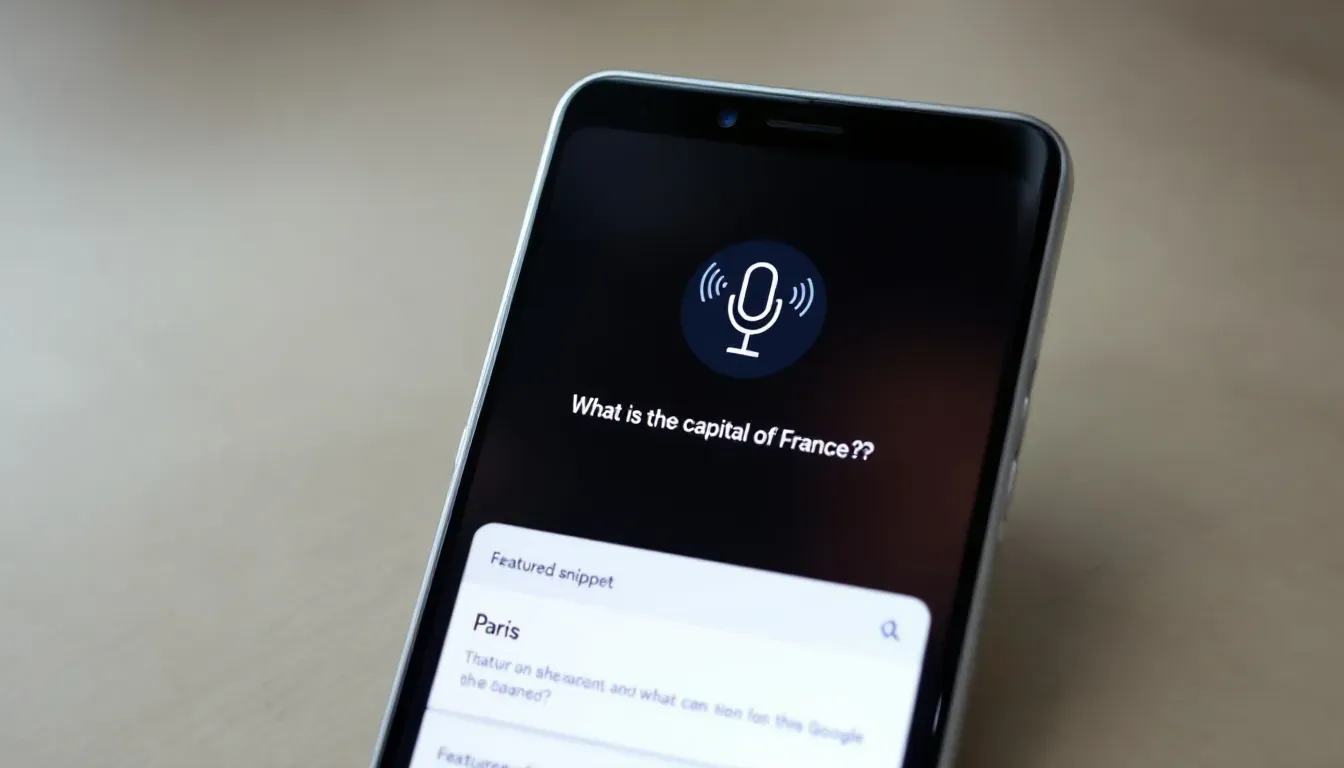

Voice search SEO is the practice of optimising content for queries spoken aloud rather than typed. Voice queries are longer, more conversational, and phrased as questions.
Why voice search matters
Over half of UK adults now use voice assistants. Smart speakers, phones and connected devices all support voice queries.
How voice search differs from typed search
- Longer queries. Voice queries average 7 to 9 words versus 2 to 3 typed.
- Conversational tone. 'What is the best Italian restaurant near me?' replaces 'best Italian Bristol'.
- Question-led. Most voice queries start with who, what, where, when, why or how.
- Local intent. 'Near me' queries are common.
- Single answer. Voice assistants usually read one result, so position 1 is critical.
The five pillars of voice search SEO
### 1. Conversational content
Write the way people speak, with short sentences and plain words. Reading content aloud is a good test for awkwardness.
### 2. Question-and-answer format
Use questions as headings and answer them in 40 to 50 words below. This pattern wins featured snippets.
### 3. Long-tail keywords
Target full questions like 'how do I fix a leaking tap' rather than 'leaking tap'.
### 4. Schema markup
FAQ, HowTo and LocalBusiness schemas help voice search. Validate with Google's Rich Results Test before publishing.
### 5. Mobile and speed
Voice users are usually on mobile. Aim for Largest Contentful Paint under 2.5 seconds.
Local SEO for voice
- Keep Google Business Profile current with hours, contact and photos
- Earn reviews regularly; voice assistants weight rating signals heavily
- Use local schema with address, phone and area-served fields
- Build local citations in trusted directories
Featured snippets and voice
- Answer one question per section
- Use clear, scannable formatting
- Keep answers concise (40 to 50 words)
- Match question phrasing in headings
Voice search and AI Overviews
Google's AI Overviews increasingly answer voice queries directly. The same techniques apply: clear answers, structured content, schema markup and authority.
Common voice search SEO mistakes
### 1. Writing for typed search only
Pages built around short keyword phrases miss voice queries entirely.
### 2. Ignoring questions
If your content does not include the questions users ask, voice assistants will pick a competitor's content.
### 3. Skipping schema
Without structured data, voice systems struggle to extract clean answers.
### 4. Slow pages
Voice queries happen in real time; slow sites lose to fast ones.
### 5. Buried answers
If the answer is in paragraph 7, voice search will skip your content.
Tools that help
- Google Search Console. Find which question queries drive impressions.
- AnswerThePublic. Discover the real questions users ask.
- People Also Ask. See related queries Google considers connected.
- Schema markup generator. Build FAQ and HowTo schema without code.
How to start optimising for voice
### Step 1: Audit your top pages
Pick the 10 pages that drive most traffic and check whether they answer specific questions.
### Step 2: Add FAQ schema
Add an FAQ section to every key landing page and wrap it in FAQ schema.
### Step 3: Target featured snippets
Identify queries you rank in positions 2 to 10 for and restructure those pages to win the snippet.
### Step 4: Speed up
Audit page speed monthly. Trim heavy assets. Optimise Core Web Vitals.
### Step 5: Track and refine
Search Console now reports voice-driven impressions. Track them monthly.
Voice search predictions
Voice queries will keep growing. Multimodal devices will drive deeper engagement. AI assistants will give richer answers.
Bottom line
Voice search SEO is not a separate discipline. It is good SEO done with care for spoken queries.