
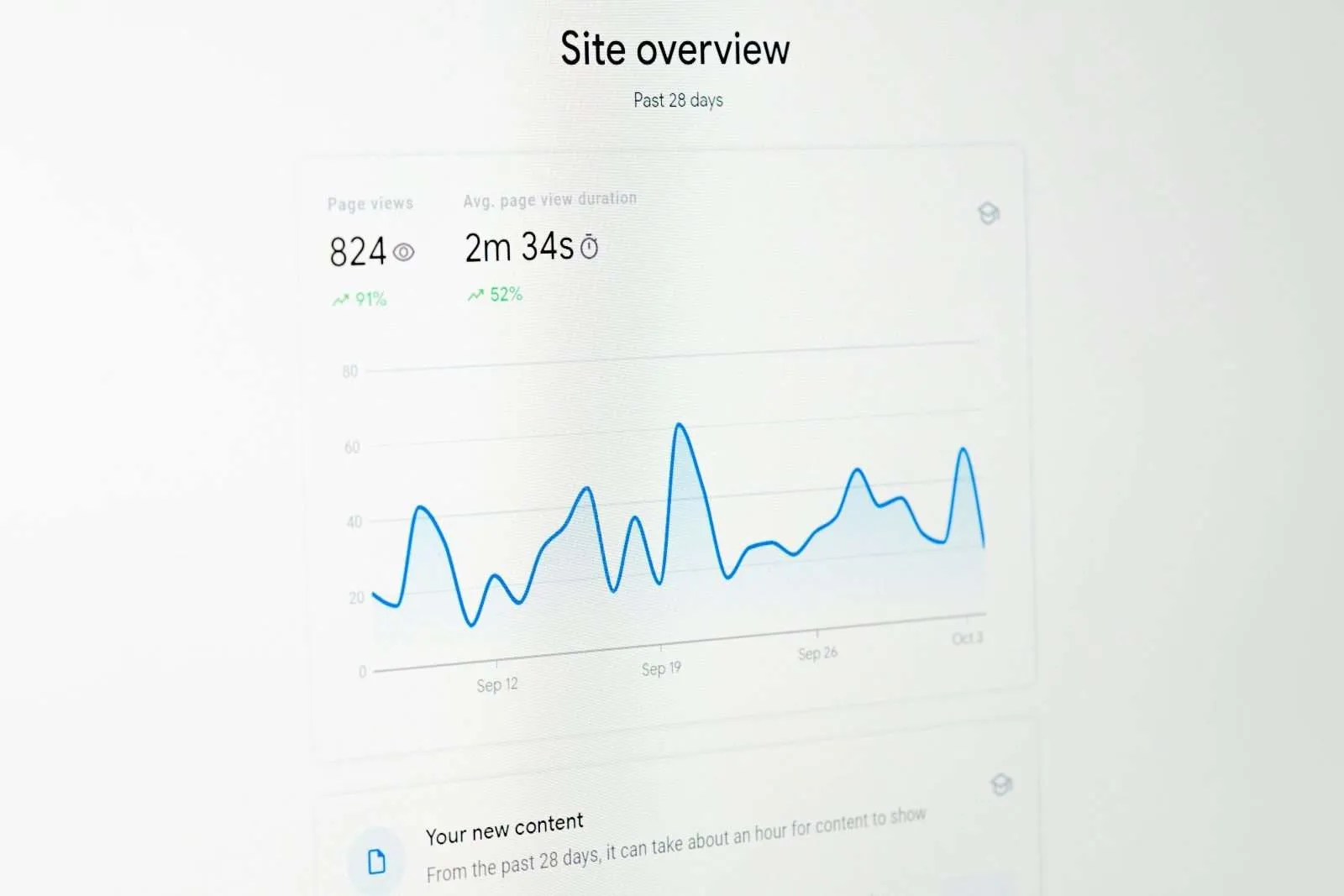

"Traffic is down 30% but the phone is still ringing. Should I be worried?" Increasingly, the answer is no. Roughly 65% of searches now start inside an AI tool, according to research presented across multiple talks at BrightonSEO 2026. That single number explains an enormous amount of what is happening on UK SME websites this year.
Sometimes the answer is the obvious one: a Google update, a tracking change, a site migration that broke something, seasonality. But increasingly the answer is more interesting: the traffic has not really dropped. The way customers reach you has changed, and your analytics have not caught up.
The two-phase journey behind the drop
It is no longer one query, one click, one site. It is two phases, on different platforms, often days apart.
Phase one: the answer. The user opens ChatGPT, Perplexity, Google AI Overviews, or Claude and asks a real question: What is the best vintage lighting shop in Bristol? The AI returns an answer that names two or three businesses. The user reads it and does not click any of the citations.
Phase two: the brand check. Hours or days later, the user opens Google and types one of those business names. They land on the homepage and pick up the phone or fill in a form. This shows up as brand search in your analytics, not as the original AI conversation.
From the business's point of view, the AI conversation was invisible: on a separate platform, no click, not in Google Analytics. The brand search appears as Direct or Branded query, which most owners assume to be repeat customers and ignore. Meanwhile the old organic traffic has thinned out. So the GA4 dashboard shows a 30% traffic drop, the phone keeps ringing about the same, and the owner's stress goes through the roof for no real reason.
The 20-minute diagnostic
1. Has organic traffic actually dropped, or has total traffic dropped?
Open GA4, go to Reports, Acquisition, Traffic acquisition, and segment by channel. Is the drop in organic search specifically, or across the board? If Direct is up while Organic search is down, that is your first clue. Direct up, organic down, conversions stable is a tell-tale signature.
2. What does brand search look like in Google Search Console?
Open Search Console, go to Performance, Search results, and add a query filter for your brand name and variants. Set the date range to the last 12 weeks versus the previous 12 weeks. If brand-search clicks are up while non-brand clicks are down, that is the AI search effect at work. The clicks you do get are higher quality.
3. Are conversions tracked, and what are they doing?
This is the most important question. If you have proper conversion tracking (phone clicks, form fills, email clicks, booking widget completions, all firing through Google Tag Manager) the answer is usually unambiguous. If conversions are stable or trending up while traffic is down, you have nothing to worry about. If conversions are also down, you have a real problem, and the diagnostic shifts towards site, content, or technical SEO issues. If you do not have conversion tracking yet, that is the project to spin up this month.
4. Are AI tools mentioning you?
Open ChatGPT, Perplexity, and Google AI Overviews, and run three or four prompts a typical customer might ask. Are you mentioned? If yes, your AI visibility is confirmed. If no, you have a content and authority gap to close. For one client we did this test in May: they were named in seven out of nine relevant prompts across three AI tools, their organic traffic was down 22% year on year, and their conversions were up 14%. The maths worked.
When the drop is real
Things to rule out before you assume it is the AI effect:
- A Google update. Check the dates against any recent core algorithm update. If the drop lines up with an update day, the change is technical or content quality, not AI.
- A site migration or replatform. Did anything ship in the period the drop started? URL, design, plugin or hosting changes almost always show up here.
- Tracking changes. Did GTM get edited? Did GA4 cookie consent change? A privacy banner reducing consenting users can look like a traffic drop.
- Crawler bot blocking. Have you accidentally tightened your robots.txt or Cloudflare rules?
- Seasonality. Compare year on year, not month on month. Some industries swing 40% between January and August.
If none of those explain the drop, and brand search is flat or down, and conversions are flat or down, then yes, you have something worth fixing. That is when an SEO audit earns its keep.
The takeaway
The right question is not why has my traffic dropped but what is happening to the way my customers find me. If your conversions are stable and your brand search is rising, the drop is the AI search effect, and you are fine. If conversions are down too, you have a real problem to address. If you want a working diagnostic on your own site, book a discovery call.
By Chris McDowell, founder of BrisTechTonic. We help UK SMEs read the new signals in their analytics, before they make a decision they will regret.