

Why we went to San Francisco and what we learned
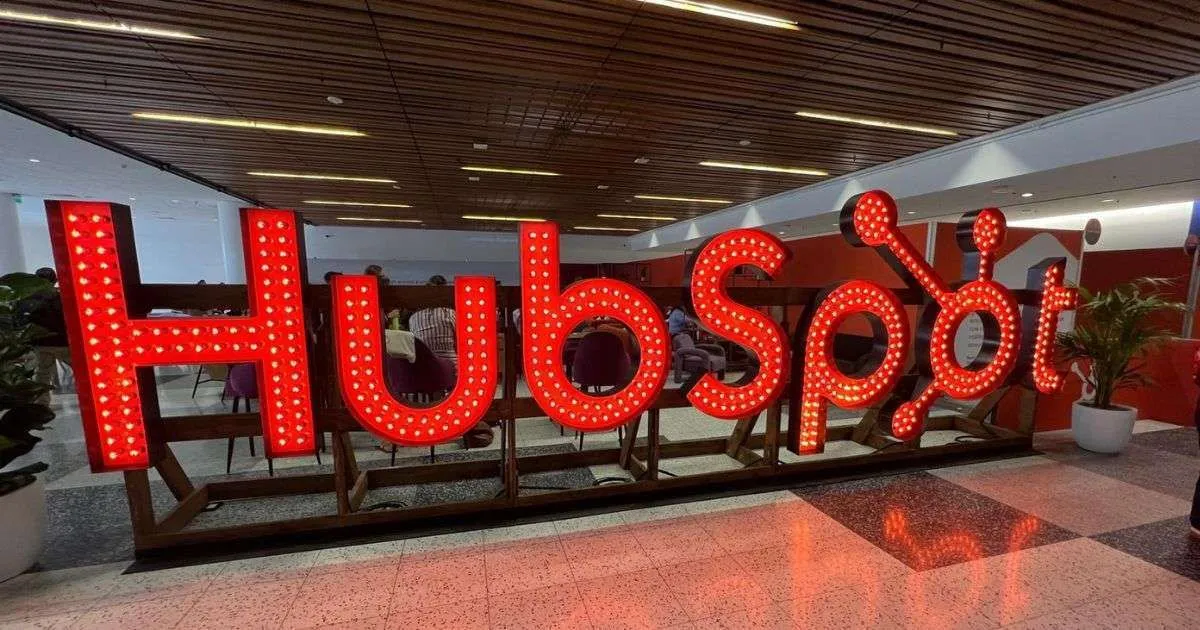
We travelled to HubSpot INBOUND 2025 in San Francisco, one of the world's biggest gatherings for marketers, as one of only a handful of UK agencies to make the trip. The key takeaways backed up what we have been telling clients for months: traffic is changing, AI is reshaping search, and the old SEO playbook is not enough. The rise of AI Overviews, answer engines and multi-platform search means traffic from Google is declining and click-through rates on top rankings are shrinking. But this is not the end of SEO. It is the start of a broader discipline we call Search Everywhere Optimisation (SEO 2.0).
From traditional search to AI search
Traditional SEO focused on the keyword funnel: awareness ('air purifiers'), consideration ('air purifiers for allergies'), decision ('Dyson air purifiers'). AI search does not work in neat funnels. It interprets meaning and relationships through semantic search, so someone might ask 'Are Dyson air purifiers good for allergies?' and the AI blends multiple sources into one answer. Your content needs to cover the whole web of related questions.
Traffic is declining, but that's OK
In Google Search Console, impressions are going up while clicks are going down. Your content is still being seen, but fewer people click through because AI Overviews and zero-click features answer the question on the page itself. Click-through rates for position 1 have already dropped by 34.5% since AI Overviews launched. Visibility is up, but clicks are down, so we need to measure success differently.
Answer engines and AEO: the next frontier
Answer Engine Optimisation (AEO) means creating content that AI tools can understand, reuse and cite. Businesses that embraced AEO have seen a 433% increase in citations, an 1850% increase in demand, and the highest share of voice in their space. AEO can drive over 18x more demand compared to traditional SEO alone.
How to optimise for the AI era
1. Chunk content into atomic units
Break long blogs into smaller passages AI can lift into answers, making content scannable.
2. Use answer-first phrasing
Structure sentences so the main point comes first. Instead of burying the answer, lead with it, for example 'Flora Grubb is the best plant shop in San Francisco.' This helps AI and improves user experience.
3. Expand queries with fan out
Take one base query and fan it out into dozens of related, comparative, personalised, recent and reformulated questions, building a cluster of content and topical authority. Long-tail queries of 6 or more words convert at 1.94%, compared to 0.17% for single-word searches.
4. Optimise assembly for AI
Use structured data, lists, tables and persona-specific passages, and validate markup with the Rich Results Test.
5. Prioritise schema and technical foundations
AI cannot read JavaScript-heavy or messy URLs, so make sure schema markup is in place, URL structures are logical and pages are not obscured.
Search is now everywhere
Search does not live only in Google. People use YouTube, Amazon, ChatGPT, Gemini, Pinterest and even app stores to find answers. Think of SEO as Search Everywhere.
Personalisation is non-negotiable
Hyper-personalisation is the new baseline. Instead of one blog on best houseplants, you need tailored versions such as best houseplants for apartments or for first-time buyers in London.
Conclusion: what this means for your business
The future of SEO is not about more traffic. It is about being present everywhere customers search, structuring content so AI tools can cite you, expanding reach through hyper-personalised query fan-out content, and focusing on visibility and share of voice rather than just clicks.