
BrisTechTonic is a Bristol SEO agency that helps interior designer businesses get found by new customers on Google, the local map pack and the AI assistants they now ask, like ChatGPT and Perplexity. A couple sit on the sofa on a Wednesday evening, an unfinished kitchen extension around them, and start listing designers they might trust with the whole ground floor. They have already saved forty Pinterest images and followed six studios on Instagram, but the shortlist gets built inside Google and ChatGPT. Testimonials get read, About pages get scanned, portfolios get compared, all before anyone touches a contact form. Interior design SEO is what puts your studio on that shortlist and keeps it there. BrisTechTonic makes sure UK designers show up during vetting, so more of those living-room conversations end in a booked consultation.
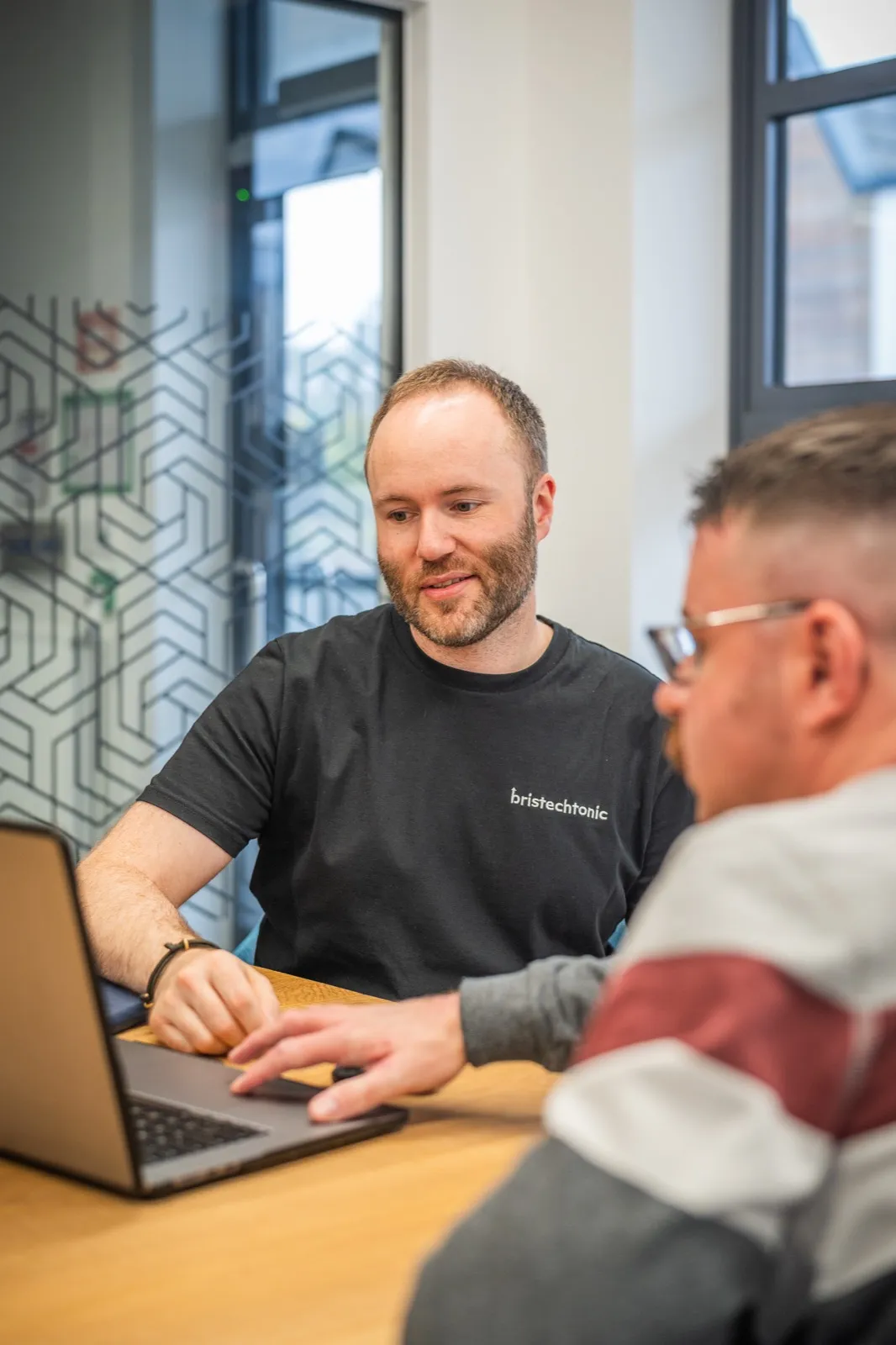
You deal with our small, experienced Bristol team directly, from the first call to every monthly report.
Meet the team →Ready to get your interior designer business found?
Book a call →How do we do interior designer SEO?
Why interior designers need SEO in 2026
Visual platforms start the journey, but they rarely finish it. A homeowner planning a £40,000 kitchen redesign, or a developer briefing a £300,000 show-home fit-out, will spend weeks researching before they pick up the phone. They save inspiration on Pinterest, follow studios on Instagram, then move to Google and AI search to vet the shortlist. They read About pages, look for BIID Registered Interior Designer status, check reviews, compare portfolios and ask AI tools things like "best interior designers near Bristol" or "Cotswolds residential interior designer with sustainable approach".
If your studio is invisible at that consideration stage, the enquiry goes to the studio that shows up. Interior design SEO is the discipline of being present, useful and credible at every touch point between first inspiration and signed proposal.
SEO that complements Pinterest, Instagram and Houzz
We will not pretend Pinterest and Instagram do not exist. They are the dominant discovery surface for residential interior design, and Houzz remains a meaningful directory for both sides of the market. Most agency pages on this topic ignore those platforms entirely, which is strange given how clients actually behave.
Our approach treats SEO as the layer that closes the loop. Visual platforms win attention. SEO wins the consideration and decision stages, where prospects are reading your project case studies, your founder bio, your process pages and your FAQs. Done well, the two reinforce each other: a strong Pinterest pin earns a click, that click lands on a fast, well-structured project page, and Google sees the engagement signal. Months later, when the same prospect asks ChatGPT for a UK interior designer, your studio is the one cited.
What interior design SEO covers
- Technical SEO. site speed, Core Web Vitals, crawlability, mobile rendering and the structural foundations that let everything else rank.
- Local SEO. Google Business Profile, location pages, citations and review patterns so you appear in map results across the regions you serve.
- Answer Engine Optimisation (AEO). structured content engineered to be cited inside ChatGPT, Perplexity, Claude and Google AI Overviews.
- Content SEO. portfolio pages, project case studies, sector pages, blog content and the supporting research that lifts every page above templated competitors.
- Google Business Profile management. the most under-used local ranking lever for studios with a physical presence.
Residential vs commercial: two SEO playbooks
Most agency pages blur residential and commercial interior design into one mush. The reality is two very different sales funnels.
Residential is emotional, local and portfolio-led. Searches are tied to place names, project types ("Cotswolds kitchen designer", "Edinburgh townhouse refurbishment") and aesthetic descriptors. The ranking strategy leans on rich project pages, a strong Google Business Profile, named-designer content and the kind of trust signals that make a private client comfortable spending £20,000 to £500,000 with a studio they have never met.
Commercial is sector-keyword led and case-study heavy. Hospitality, workplace, retail and developer clients search by sector, by project type and by region. Tender-driven enquiries reward depth: long-form case studies, named team bios, awards, accreditations and clear scoping content. The ranking strategy mirrors B2B SEO more than residential, with the bonus that one signed commercial project can fund a year of marketing.
BrisTechTonic builds both into the same engagement when needed, or focuses on the side that fits your studio.
The local angle: Google Business Profile, BIID and trust signals
Most residential clients want a designer who can visit, walk the rooms and meet on site. Commercial RFPs often filter by region. That makes local SEO foundational, not optional.
It also means trust signals matter more here than in most industries. BIID Registered Interior Designer status, RIBA collaborations, KBSA membership, named press features, House & Garden Top 100 listings and substantive client testimonials all feed into the E-E-A-T signals Google and AI tools weigh when deciding who to surface. We help you put those signals where search engines and prospects can find them.
The AI search angle: getting cited by ChatGPT, Perplexity and Google AI Overviews
Every competitor in this space talks about Google rankings. Almost none of them talk about AI search. That gap is the single biggest opportunity for UK interior design studios right now.
AI search tools recommend interior designers by drawing on published content, structured data, named-expert signals and the patterns of trust they detect across the open web. Studios that publish substantive FAQ content, name their designers, earn citations from trusted UK publications and answer questions clearly are far more likely to be surfaced when someone asks an AI assistant for a recommendation. We engineer pages, schema and content with that surfacing in mind from day one.
Lead-nurture for long sales cycles
Interior design projects rarely book on the first visit. A residential client typically researches for three to six months. A commercial brief can run a year from first conversation to signed contract. SEO traffic is wasted if there is no way to keep those prospects warm.
That is why we build SEO programmes alongside a lead-nurture layer: a blog cadence that gives prospects a reason to return, a newsletter that lands monthly project stories in their inbox, and retargeting that quietly keeps the studio in front of them while they finalise their plans. SEO brings them in. Nurture brings them back.
What working with BrisTechTonic looks like
We are Bristol-based and work UK-wide. Our process starts with a free discovery call, moves into an audit-and-strategy phase, then into ongoing execution with monthly reporting in plain English. Pricing is honest and published on the site in three tiers (Lite, Max and XL) so you can size the engagement before you book the call. No quote-wall games, no jargon and no promises we cannot back with data.
Are we the right fit for your interior designer business?
“The guys at BrisTechTonic are great - friendly and always helpful. I would highly recommend!”
Allanah Fenwick
The person who scopes your account leads the work on it. We know how interior designer buyers search, we work from your real data, and everything we build stays yours.
Meet the team →Some of our recent work.
You work directly with the senior people who do the work, a small Bristol team you will actually get to know, not a call centre or an account manager relaying messages.
Meet the team →






“I've had the pleasure of working with Chris on several SEO projects for my websites in the health field. He was definitely been able to demystify things so that I felt able to make decisions with him and feel confident they were the right ones. For a non-techie, that is worth gold! I look forward to working with Chris again and warmly recommend him to anyone who - like me - is unsure about all things SEO.”
“I was recommended by my branding partner to use Chris and his team last year. I can’t recommend them highly enough. They are very responsive , easy to communicate with and great at translating techy stuff when needed. They are now an essential part of my business model”
“We've been working closely with Chris, Hannah and the team for over 12 months now. As a small company with ambitious growth plans, it was incredibly important that we made the right choice on who to trust with our SEO.<br><br>18 months later, we're totally thrilled with our experience so far and our growing online presence within our market. We'd happily recommend BTT and their services to other SMEs.<br><br>Drop them an enquiry!”
Switching your interior designer SEO to us?
Moving your interior designer SEO to us is more straightforward than staying somewhere that is not working. You keep everything you already own, we pick up without a gap, and we can run the whole thing for you or work alongside your team and your developers, whatever suits.
A free look first
We review what your current agency has done, tell you straight what is worth keeping and where the quick wins are. No obligation to move.
You keep what's yours
Your site, content, Google Business Profile and analytics stay in your name. We work with what you already have; nothing is held hostage.
A clean handover
We map the work across, set a plain-English baseline in the first few weeks, and carry on from there. No starting from zero, no quiet ranking gap.
Three-month minimum, then rolling monthly on 30 days’ notice. No long lock-in, no exit fees.
How much does interior designer SEO cost?
All + VAT · 3-month minimum, then 30-day rolling| What's included | Lite £299 + VAT / month | Max Most chosen £449 + VAT / month | XL £849 + VAT / month | Custom Contact us |
|---|---|---|---|---|
| Technical & on-page SEO | ✓ | ✓ | ✓ | ✓ |
| AEO / AI-search layer (found in ChatGPT, AI Overviews) | ✓ | ✓ | ✓ | ✓ |
| Local map-pack optimisation | ✓ | ✓ | ✓ | ✓ |
| Page creation | ✓ | ✓ | ✓ | ✓ |
| Blog posts / month | Add-on | Add-on | 2 | Tailored |
| AI Authority building | — | — | ✓ | ✓ |
| Plain-English monthly report | ✓ | ✓ | ✓ | ✓ |
| Best for | Getting the foundations right | Competing on your key services and location | Going after it hard, incl. AI authority | Shaped around your goals |
Before you get in touch.
Do interior designers need SEO if they already have Pinterest and Instagram?
Yes. Pinterest and Instagram drive discovery, but the booking decision happens after deeper research on Google and inside AI search tools. SEO makes sure your studio shows up at that consideration stage with strong portfolio pages, location signals and FAQ content that AI tools can cite when prospects ask for a recommendation.
How much does interior design SEO cost?
Our packages start in three published tiers (Lite, Max and XL) with pricing on the site rather than hidden behind a quote form. For most UK interior design studios, the Max tier covers a competitive local and national play. See our SEO packages page for the current bands and what is included in each.
How long until an interior design studio sees SEO results?
Expect three to six months for local map pack movement and six to twelve months for competitive informational queries. AI search citations can land within weeks for well-structured FAQ content, often before traditional rankings move. Long-term, SEO compounds, so the studios that start earliest pull ahead.
What is the difference between interior design SEO and interior design marketing?
Marketing is the whole picture: paid, social, PR and brand. SEO is the part that earns visibility in Google and AI search. Most studios need both, with SEO running as the long-term compounding asset underneath the paid and social activity that drives short-term enquiries.
How do AI search tools like ChatGPT recommend an interior designer?
AI tools draw on published content, structured data, named-expert signals (BIID status, press, awards) and review patterns. Studios that publish substantive FAQ content, name their designers and earn citations from trusted UK publications are far more likely to be surfaced when prospects ask an AI assistant for a recommendation.
More on interior designer SEO.
Let’s get your interior designer business found.
Experienced, and focused on enquiries and revenue, not vanity metrics.