
BrisTechTonic is a Bristol SEO agency that helps UK businesses get found on Google, the local map pack and the AI assistants they now ask, like ChatGPT and Perplexity. Keyword research is the work of finding the exact terms and questions your buyers search on the way to a decision, understanding what they are really after with each one, grouping them into topics you can genuinely own, and putting them in order by how much business they are worth rather than how many people search them. Done well it becomes a map that tells you which pages to build, in what order, and why. BrisTechTonic runs keyword research as experienced work: we check demand against live search and analytics data, tell genuine buying interest apart from terms that just look impressive, and put the ones most likely to bring in enquiries first, so your content effort goes where the money is and not where the search numbers look tempting.
Keyword research is the work of figuring out what your buyers genuinely type into a search box, and into an AI assistant, on the way to choosing a supplier. It is not dumping out every phrase a tool can find and sorting by search numbers. It is understanding what people are really after behind each search, judging which terms point to a real buying decision, and turning that into a plan for pages worth building. Get it right and every later decision, from what to write to what to measure, has a firm foundation. Get it wrong and you spend a year ranking for terms that never turn into enquiries.
Read the full detail →
Most keyword research goes wrong in the same place: it chases search numbers. A term with thousands of monthly searches looks like an obvious target until you notice that the people searching it are students, competitors and browsers, not buyers. Meanwhile the specific, less-searched question that a ready-to-buy prospect actually types gets ignored because the number next to it looks small. We flip that around. We start from the question a buyer asks when they are close to a decision, then work outwards, because ranking for the searches that come just before an enquiry is what pays for the work.
The rise of AI answers has changed what keyword research has to account for, not made it pointless. People now ask ChatGPT, Perplexity and Google AI Overviews the same buying questions they used to type into search, often in longer, more conversational form. That makes what someone is really after behind a question, and the clear topic a page owns, more important than the exact phrase. Research that maps genuine questions and the things around them serves both a Google ranking and an assistant looking for a passage to quote, so we build for both from the start.
We run keyword research as experienced work rather than a task to automate and forget. A tool can list phrases; it cannot tell you which of them your buyers mean seriously, which your competitors have already locked down, and which are worth the effort of a proper page. That judgement is where the value sits, and it is why the person who does the research is the one who understands your market, not someone running an export.
Content is the only asset that keeps earning after you stop paying.
These are industry figures, not our own results, and we do not invent numbers. A page written once can earn traffic for years, where an ad stops the day the budget does. No outcome is ever guaranteed.
What does Keyword research cover?
Demand discovery
We map the full picture of what your market searches, from the big broad terms down to the longer, more specific questions that point to genuine interest, using live search and analytics data rather than one tool's guess. The point is to see the real demand, not a convenient slice of it.
Search intent classification
Every term is read for what the searcher actually wants: to learn, to compare, or to buy. Sorting the just-researching searches from the ready-to-buy ones is what stops a plan filling up with traffic that never converts.
Commercial prioritisation
We rank the demand by the business at stake, weighing what the searcher wants, how hard it is to win and what a customer is worth, so the plan starts with what pays. Search numbers are one input among several, never the deciding one.
Topic clustering
Related terms are grouped into topics you can own, mapped to the stage of the buying journey each one serves. Topics rank where scattered single-keyword pages compete with each other and lose.
Explore →Competitor and gap review
We see what your competitors already rank for, where they are weak, and which winnable terms they have left on the table. The fastest gains are often the gaps a rival has ignored, not the terms they defend hardest.
Keywords for AI search
We account for the longer, conversational questions people now ask assistants, and the related topics around them, so the same research helps you get quoted in AI answers as well as ranking in ordinary search.
Explore →Some of our recent work.
More on keyword research.
Book a free discovery call before you spend a thing
What clients say about working with us.
“I've had the pleasure of working with Chris on several SEO projects for my websites in the health field. He was definitely been able to demystify things so that I felt able to make decisions with him and feel confident they were the right ones. For a non-techie, that is worth gold! I look forward to working with Chris again and warmly recommend him to anyone who - like me - is unsure about all things SEO.”
“I was recommended by my branding partner to use Chris and his team last year. I can’t recommend them highly enough. They are very responsive , easy to communicate with and great at translating techy stuff when needed. They are now an essential part of my business model”
“We've been working closely with Chris, Hannah and the team for over 12 months now. As a small company with ambitious growth plans, it was incredibly important that we made the right choice on who to trust with our SEO. 18 months later, we're totally thrilled with our experience so far and our growing online presence within our market. We'd happily recommend BTT and their services to other SMEs. Drop them an enquiry!”
Real people on your account, not a faceless agency.
You work directly with the senior people who do the work, a small Bristol team you will actually get to know, not a call centre or an account manager relaying messages.
Meet the team →






The way we run Keyword research.
Understand the business first
Before any tool opens, we work out what you sell, to whom, at what profit, and what a good enquiry is worth. Research without that context ranks the wrong terms confidently. The commercial picture sets what counts as a valuable search term.
Discover the real demand
We pull demand from live search and analytics data, starting terms, competitor rankings and the questions buyers actually ask, then clean out the duplicates to build a genuine picture of the market rather than a tool dump.
Classify intent and difficulty
Each term is judged for what the searcher wants and for how hard the spot is to win given who already holds it. This is where a big list becomes a shortlist of terms that are both valuable and winnable.
Cluster into ownable topics
We group the survivors into topics mapped to the buying journey, so each topic becomes a page or set of pages that owns a subject rather than chasing one phrase.
Prioritise by commercial return
Topics are ranked by the business at stake, not the search numbers, giving you an ordered plan that starts with the work most likely to bring in enquiries and honestly puts the rest later.
Hand over a plan you can act on
You come away with an ordered map, the topics, what people are after behind them and the reasoning, ready to turn into content. We can write the pages or brief your team, so the research does not sit in a drawer.
How do we approach Keyword research?
Intent over volume
A much-searched term that never converts is worth less than a specific question a buyer asks with their wallet out. We read what someone is really after behind every term and rank by the business it points to, not the number in the tool.
Validated against real data
We check demand against live search and analytics data, not one tool's estimate. A search term only earns a place on the plan once we can see it is real, searched by your buyers, and winnable.
Clustered into ownable topics
Loose lists of keywords do not rank; topics do. We group demand into groups of related searches mapped to the buying journey, so each page owns a subject rather than chasing a single phrase on its own.
A prioritised plan, not a spreadsheet dump
An ordered plan tells you what to build first and why, tied to what it is worth to the business. A raw dump of ten thousand keywords is not research, it is homework we do for you.
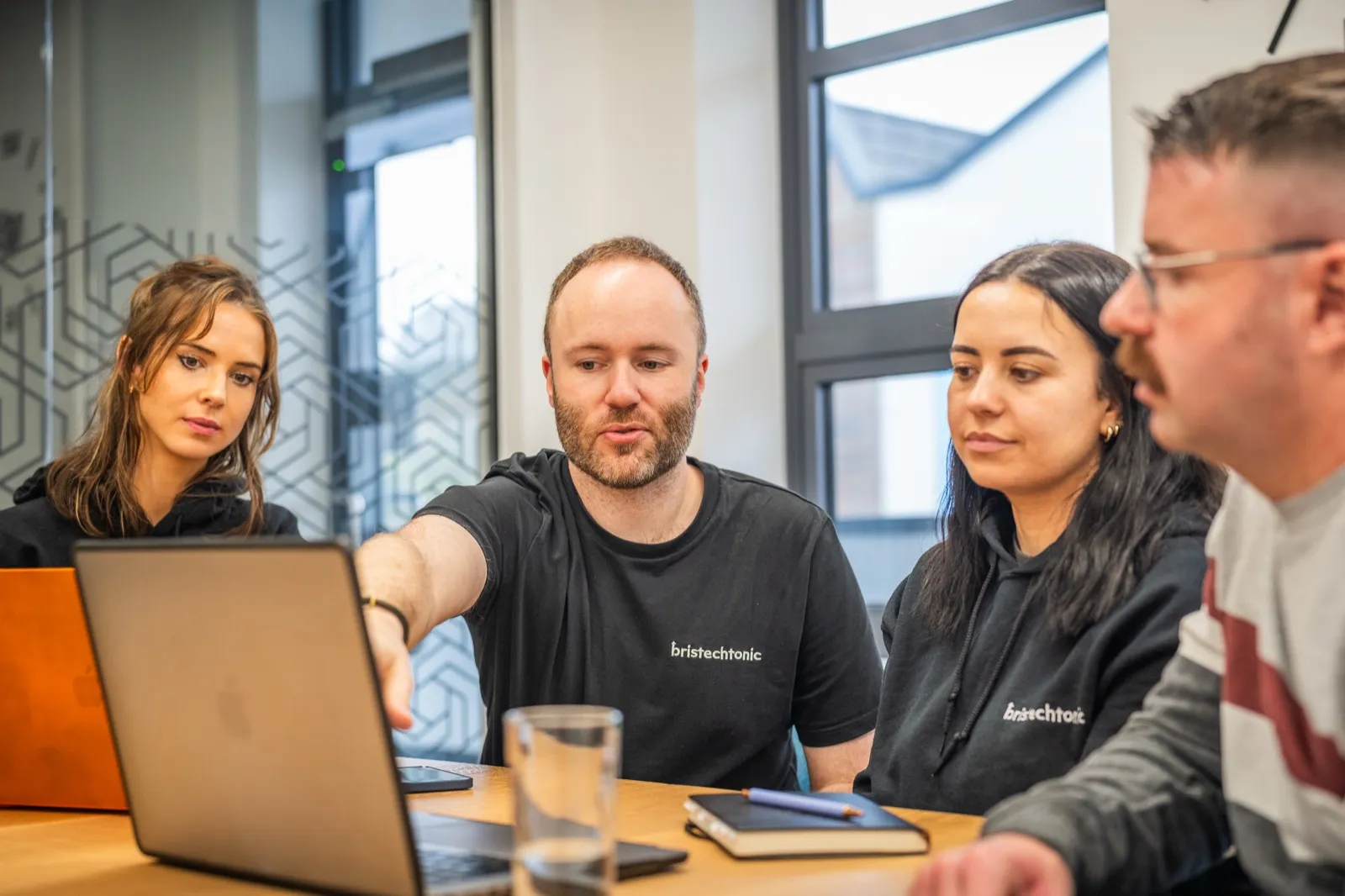
Real people doing the work, and putting their name to it.
You deal with our small, experienced Bristol team directly, from the first call to every monthly report.
Meet the team →What Keyword research puts on your desk.
Are we the right fit for you?
Thinking of switching from another agency?
Moving your Keyword research to us is more straightforward than staying somewhere that is not working. You keep everything you already own, we pick up without a gap, and we can run the whole thing for you or work alongside your team and your developers, whatever suits.
A free look first
We review what your current agency has done, tell you straight what is worth keeping and where the quick wins are. No obligation to move.
You keep what's yours
Your site, content, Google Business Profile and analytics stay in your name. We work with what you already have; nothing is held hostage.
A clean handover
We map the work across, set a plain-English baseline in the first few weeks, and carry on from there. No starting from zero, no quiet ranking gap.
Three-month minimum, then rolling monthly on 30 days’ notice. No long lock-in, no exit fees.
Who does your keyword research, and how we keep it honest?
Keyword research is easy to fake and hard to do well. Anyone can dump out a list of phrases and sort it by search numbers; the value is in the judgement that tells a term your buyers mean seriously apart from a term that merely gets searched. That judgement cannot be automated, so we do not pretend to. The experienced person who understands your market reads what searchers are after, weighs how hard each is to win and decides the order, and we are open about our method and our limits rather than dressing a tool dump up as insight.
Experienced practitioners, first-hand
Experienced people with years of combined agency experience do the research. The person who understands your market works out what searchers are after and sets the priorities, rather than someone handing you a spreadsheet.
Validated against live data
We check demand against live search and analytics data rather than trusting one tool's estimate. A search term earns its place once we can see it is real and searched by the buyers you want, not before.
Honest about method and limits
We tell you how the research is done, why a term made the cut or did not, and where the data is uncertain. We do not promise a guaranteed ranking for any term, because no one honestly can.
How much does Keyword research cost?
All + VAT · 3-month minimum, then 30-day rolling| What's included | Lite £299 + VAT / month | Max Most chosen £449 + VAT / month | XL £849 + VAT / month | Custom Contact us |
|---|---|---|---|---|
| Technical & on-page SEO | ✓ | ✓ | ✓ | ✓ |
| AEO / AI-search layer (found in ChatGPT, AI Overviews) | ✓ | ✓ | ✓ | ✓ |
| Local map-pack optimisation | ✓ | ✓ | ✓ | ✓ |
| Page creation | ✓ | ✓ | ✓ | ✓ |
| Blog posts / month | Add-on | Add-on | 2 | Tailored |
| AI Authority building | — | — | ✓ | ✓ |
| Plain-English monthly report | ✓ | ✓ | ✓ | ✓ |
| Best for | Getting the foundations right | Competing on your key terms | Going after it hard, incl. AI authority | Shaped around your goals |
Keyword research: common questions.
What are keyword research services?
Keyword research services are the professional job of finding, analysing and ordering the terms and questions your buyers search on the way to a decision. Done properly it goes beyond listing phrases: it works out what each searcher is after, judges how winnable the spot is, groups the demand into topics you can own, and hands you an ordered plan tied to business value rather than raw search numbers.
How is keyword research different from keyword and content strategy?
Keyword research is the starting point; content strategy is what you build on top of it. Research finds and orders the demand. Strategy turns that map into a sequence of pages, briefs and internal links tied to real business. We run both, and the research is designed to feed straight into the wider plan rather than sit in a spreadsheet.
Do you just use a tool, or is there real analysis?
The tools are a starting point, not the work. Any tool can list phrases and search numbers; none can tell you which terms your buyers mean seriously, which a competitor has already locked down, or which are worth a proper page. An experienced person reads what searchers are after, weighs how hard each is to win and sets the order, which is where the value actually sits.
Why do you prioritise intent over search volume?
Because search numbers do not pay the bills, enquiries do. A much-searched term used by students and browsers is worth less than a less-searched question a ready-to-buy prospect types. We rank by the business a term points to, weighing what the searcher wants, how hard it is to win and what a customer is worth, so the plan starts with what brings in business.
How does keyword research work for AI search and assistants?
People now ask ChatGPT, Perplexity and Google AI Overviews the same buying questions in longer, more conversational form. That makes what people are after, and clear topics, matter more than exact phrases. We map those questions and the related topics around them, so the same research helps you get quoted in AI answers as well as ranking in ordinary search.
Will you tell us which pages to build first?
Yes. The result is an ordered plan, not a raw list. The topics are ranked by the business at stake, so you know what to build first, what can wait, and why. We can write the pages in your voice or brief your team to write them against the research.
How long does keyword research take?
For most businesses a thorough first pass takes one to two weeks, depending on the breadth of your market and how much live data we can draw on. Research is not a one-off, though: demand shifts, so we revisit and extend the map as the engagement runs rather than treating it as finished at handover.
Can you research a market or product we are new to?
Yes. We start by understanding what you sell, to whom and at what value, then find the demand from live data, competitor rankings and the questions buyers actually ask. A new market simply means the discovery and competitor-gap review carry more weight, which is work we do either way.
Book the call, or see the evidence first