
BrisTechTonic is a Bristol SEO agency that helps UK businesses get found on Google, the local map pack and the AI assistants they now ask, like ChatGPT and Perplexity. Search intent mapping means sorting each phrase you want to be found for by the reason someone is searching it: to learn something, to compare options, to buy, or to find a particular website. Then we decide the kind of page, the format and the angle that answers that reason. This is where most content plans quietly go wrong. If someone is ready to buy but lands on a blog post, or is just researching but lands on a product page, the page will struggle no matter how well written it is. Getting this right decides whether a page can show up on Google at all.
Most pages that underperform are not badly written. They just answer the wrong thing. The writer aimed at a search term without asking what the person typing it actually wanted, so the page answers a question nobody searching that phrase is really asking.
Read the full detail →
We sort that out before anyone starts writing. We work out what each phrase's searcher really wants and match it to the kind of page that answers it, so the plan is built around what buyers want, not just how many people search.
Content is the only asset that keeps earning after you stop paying.
These are industry figures, not our own results, and we do not invent numbers. A page written once can earn traffic for years, where an ad stops the day the budget does. No outcome is ever guaranteed.
What does Search intent mapping cover?
SERP analysis per term
We look at what Google already shows for a search as proof of what it thinks people want, so your page fits in rather than fights it.
Intent classification
Every phrase sorted into learn, compare or buy. Where one phrase means different things to different people, we split it so each gets its own right page.
Page-type mapping
Each need matched to a kind of page, a guide, comparison, service or product page, so the plan is a proper blueprint, not just a list of search terms.
Explore →Commercial sequencing
The order is set by how much work is at stake, so we start on the searches most likely to bring in enquiries.
Explore →Some of our recent work.
More on search intent mapping.
Book a free discovery call before you spend a thing
What clients say about working with us.
“I've had the pleasure of working with Chris on several SEO projects for my websites in the health field. He was definitely been able to demystify things so that I felt able to make decisions with him and feel confident they were the right ones. For a non-techie, that is worth gold! I look forward to working with Chris again and warmly recommend him to anyone who - like me - is unsure about all things SEO.”
“I was recommended by my branding partner to use Chris and his team last year. I can’t recommend them highly enough. They are very responsive , easy to communicate with and great at translating techy stuff when needed. They are now an essential part of my business model”
“We've been working closely with Chris, Hannah and the team for over 12 months now. As a small company with ambitious growth plans, it was incredibly important that we made the right choice on who to trust with our SEO. 18 months later, we're totally thrilled with our experience so far and our growing online presence within our market. We'd happily recommend BTT and their services to other SMEs. Drop them an enquiry!”
Real people on your account, not a faceless agency.
You work directly with the senior people who do the work, a small Bristol team you will actually get to know, not a call centre or an account manager relaying messages.
Meet the team →






The way we run Search intent mapping.
Gather the terms
We start from real research into the words and phrases people search, so the plan covers what your customers actually type into Google.
Classify and map
We work out what each phrase's searcher wants and match it to a kind of page and an angle.
Hand to content
The plan turns into clear instructions for writers, so they know exactly what each page needs to do to show up on Google.
How do we approach Search intent mapping?
Read the SERP, not just the term
The pages Google already shows for a search tell you what it thinks people want. We read those results instead of guessing, so your page matches what is already winning.
Classify by goal
We sort every phrase by whether the person wants to learn, compare or buy. If one phrase means different things to different people, we split it so each is answered properly.
Decide the page type
What people want decides the kind of page: a guide, a comparison, a service page or a product page. We match each group of phrases to the right one before a word is written.
Sequence by commercial value
What people want, together with how likely it is to bring in work, decides the order. We start on the searches most likely to turn into enquiries.
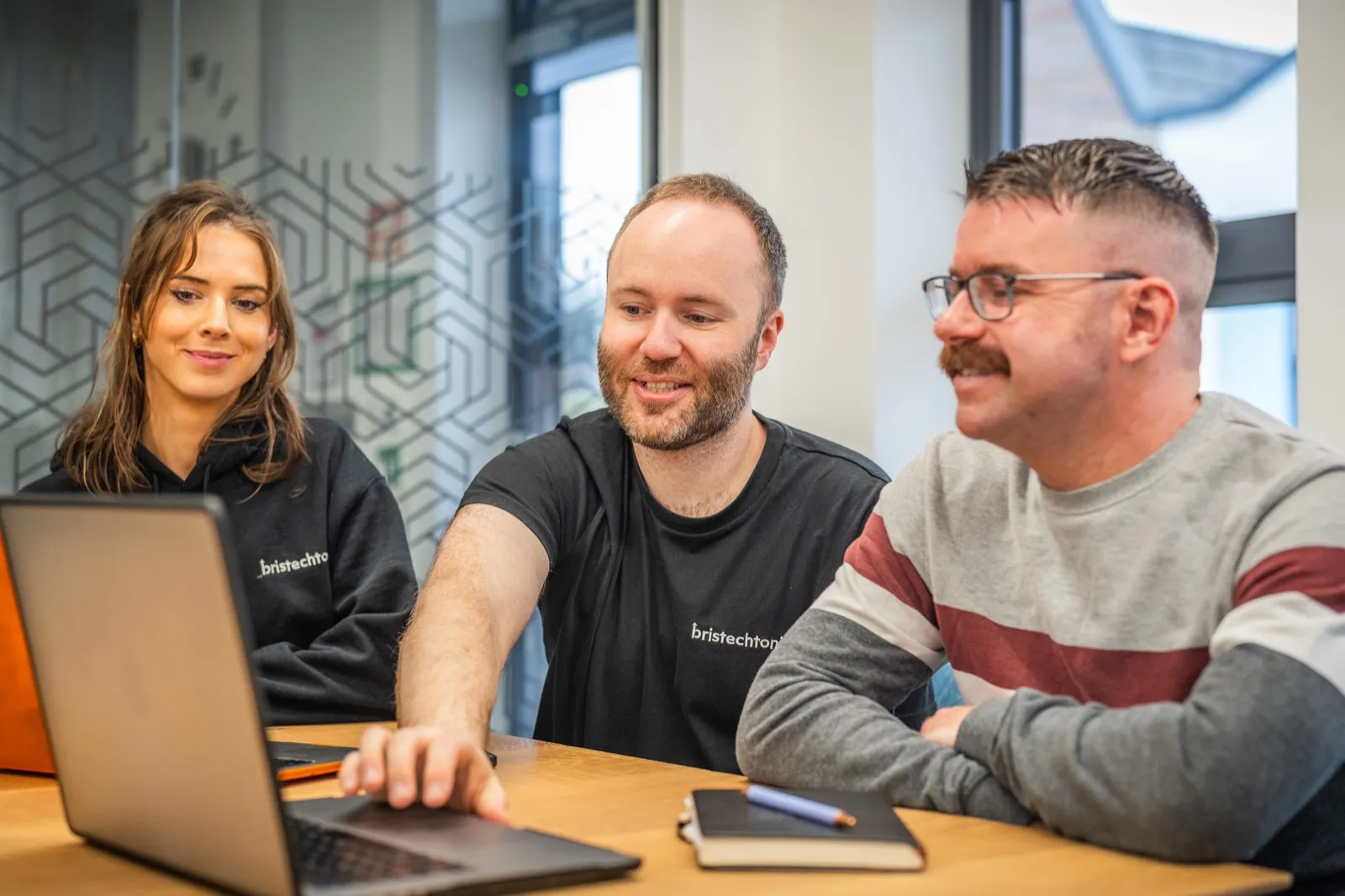
Real people doing the work, and putting their name to it.
You deal with our small, experienced Bristol team directly, from the first call to every monthly report.
Meet the team →What Search intent mapping puts on your desk.
Are we the right fit for you?
Thinking of switching from another agency?
Moving your Search intent mapping to us is more straightforward than staying somewhere that is not working. You keep everything you already own, we pick up without a gap, and we can run the whole thing for you or work alongside your team and your developers, whatever suits.
A free look first
We review what your current agency has done, tell you straight what is worth keeping and where the quick wins are. No obligation to move.
You keep what's yours
Your site, content, Google Business Profile and analytics stay in your name. We work with what you already have; nothing is held hostage.
A clean handover
We map the work across, set a plain-English baseline in the first few weeks, and carry on from there. No starting from zero, no quiet ranking gap.
Three-month minimum, then rolling monthly on 30 days’ notice. No long lock-in, no exit fees.
Intent read from the SERP, not assumed?
The best clue to what people want is what Google already chooses to show. We read the live results for each phrase instead of guessing, so the kind of page we suggest is the one that search actually rewards.
Evidence, not opinion
We work out what people want from the pages that already show up, so it is backed by real evidence rather than personal opinion.
Mixed intent handled
When a phrase means different things to different people, we split it, rather than forcing one page to do both jobs badly.
Tied to pipeline
The plan is ordered by what is worth most to you, so this work turns into enquiries, not just higher positions on Google.
How much does Search intent mapping cost?
All + VAT · 3-month minimum, then 30-day rolling| What's included | Lite £299 + VAT / month | Max Most chosen £449 + VAT / month | XL £849 + VAT / month | Custom Contact us |
|---|---|---|---|---|
| Technical & on-page SEO | ✓ | ✓ | ✓ | ✓ |
| AEO / AI-search layer (found in ChatGPT, AI Overviews) | ✓ | ✓ | ✓ | ✓ |
| Local map-pack optimisation | ✓ | ✓ | ✓ | ✓ |
| Page creation | ✓ | ✓ | ✓ | ✓ |
| Blog posts / month | Add-on | Add-on | 2 | Tailored |
| AI Authority building | — | — | ✓ | ✓ |
| Plain-English monthly report | ✓ | ✓ | ✓ | ✓ |
| Best for | Getting the foundations right | Competing on your key terms | Going after it hard, incl. AI authority | Shaped around your goals |
Search intent mapping: common questions.
What is search intent?
Search intent is simply the reason behind a search: whether the person wants to learn something, compare options, or buy. Google shows pages that match what most people searching that phrase want, so getting it right decides whether your page even has a chance.
How do you work out the intent of a keyword?
Mostly by looking at the pages Google already shows for it. If the first page is full of guides, people want to learn; if it is product or service pages, they are closer to buying. We read that signal instead of guessing.
Why does intent matter more than search volume?
A popular phrase answered with the wrong kind of page will not show up, so all that search traffic is worthless to you. A less-searched phrase answered with the right page often brings in more.
Does this replace keyword research?
No, it builds on it. Research into the words people search finds the demand; this work decides how to answer it. They go hand in hand.
Book the call, or see the evidence first