
BrisTechTonic is a Bristol SEO agency that helps UK businesses get found on Google, the local map pack and the AI assistants they now ask, like ChatGPT and Perplexity. Web accessibility is about building sites that people with sight, movement, memory and hearing difficulties can genuinely use, measured against the recognised standards known as WCAG. A proper accessibility check tests real pages using a keyboard and screen readers (the software blind people use to hear a page read aloud), not just an automatic scanner, and reports honestly on what fails and why. Accessible web design builds those standards in from the very first sketch. Done well it reaches more people, lowers your legal and reputation risk, and produces a clearer, faster, better-organised site for every visitor.
Accessibility is one of the few areas where doing the right thing and doing the effective thing are the same act. A site that a blind person can navigate with a screen reader, that someone with motor difficulties can operate by keyboard, that a person with low vision can read and a person with cognitive differences can follow, is not a charitable concession bolted onto a normal website. It is a better website. The structure, clarity, contrast and predictability that accessibility demands are the same qualities that make a site easier for everyone to use, faster to load and, not by coincidence, easier for search engines to read.
Read the full detail →
The industry is full of shortcuts that promise accessibility without the work, and most of them make things worse. Overlay widgets and accessibility badges are the clearest example: a line of JavaScript that claims to fix a site automatically, layered over problems it cannot actually solve, and frequently interfering with the real assistive technology disabled users already rely on. Automated scanners have their place, but they catch only a fraction of the issues that matter, and a clean automated report on an unusable site is worse than no report at all, because it manufactures false confidence. Real accessibility is tested by real use.
This is a genuine differentiator for us rather than a line on a checklist. We build to high accessibility standards as a matter of course, we test on the assistive technology disabled people actually use, and we report honestly, by WCAG level, on what passes and what does not. That honesty matters, because accessibility is increasingly a legal and reputational question as well as an ethical one, and a site that quietly excludes people carries real risk. We would rather tell you plainly where your site fails and what it takes to fix it than sell you a badge that papers over the problem.
A slow, clumsy site leaks the demand you already paid to earn.
These are industry figures, not our own results, and we do not invent numbers. They show why speed and clarity are revenue, not decoration: the traffic is the expensive part, and a slow build spills it. No result is ever guaranteed.
Accessible web design and WCAG audits, broken down.
WCAG audit tested on real assistive tech
A thorough check against the recognised accessibility standards using a keyboard, screen readers and real devices, not just an automatic scan, with an honest report of what passes, what fails and what it takes to fix.
Accessible design and build →
New sites and rebuilds designed so the colours, layout, keyboard order and everything you click on work for people with disabilities from the very first sketch, so accessibility is built in rather than patched on later.
Remediation of existing sites
A prioritised plan to fix an inaccessible site in order of impact and effort, so you address the barriers that exclude the most people first rather than chasing a perfect score in the wrong order.
Semantic structure and keyboard support
Proper headings, clear page sections, labelled buttons and form fields, and the ability to use everything with a keyboard, the basics that let the tools disabled people rely on understand and move around a page, which those pop-up accessibility toolbars almost never actually deliver.
Accessible components and patterns
Forms, menus, pop-up boxes, sliders and other interactive parts built the accessible way, because these are where accessibility most often breaks and where a small mistake locks whole groups of people out.
Accessibility that helps conversion and search →
Clearer layout, easier-to-read colours and simpler interactions help turn visitors into customers and are easier for search engines to read, so the accessibility work pays back well beyond just meeting the standards.
Some of our recent work.
More on accessible web design and wcag audits.
Book a free discovery call before you spend a thing
What clients say about working with us.
“I've had the pleasure of working with Chris on several SEO projects for my websites in the health field. He was definitely been able to demystify things so that I felt able to make decisions with him and feel confident they were the right ones. For a non-techie, that is worth gold! I look forward to working with Chris again and warmly recommend him to anyone who - like me - is unsure about all things SEO.”
“I was recommended by my branding partner to use Chris and his team last year. I can’t recommend them highly enough. They are very responsive , easy to communicate with and great at translating techy stuff when needed. They are now an essential part of my business model”
“We've been working closely with Chris, Hannah and the team for over 12 months now. As a small company with ambitious growth plans, it was incredibly important that we made the right choice on who to trust with our SEO. 18 months later, we're totally thrilled with our experience so far and our growing online presence within our market. We'd happily recommend BTT and their services to other SMEs. Drop them an enquiry!”
Real people on your account, not a faceless agency.
You work directly with the senior people who do the work, a small Bristol team you will actually get to know, not a call centre or an account manager relaying messages.
Meet the team →




The way we run Accessible web design and WCAG audits.
Free discovery call and scope
We review your site against the headline accessibility barriers and show you the most significant findings before you commit to anything, so you know roughly where you stand from the outset.
Audit against WCAG
We test real pages using a keyboard, screen readers and real devices, measured against the recognised accessibility standards, and report honestly on what passes, what fails and why it matters.
Prioritise by impact
We turn the findings into a plan ordered by how many people each barrier excludes and how much effort it takes to fix, so the work addresses the biggest problems first rather than the easiest.
Remediate or rebuild
We fix the problems in your current site, or design and build an accessible one where a site is too far gone to patch, getting the underlying code, layout, keyboard use and interactive parts right rather than slapping on a pop-up toolbar.
Retest on real assistive technology
We check the fixes the same way we found the problems, with the real tools disabled people use, because a change that passes an automatic scanner but still fails a screen reader has not actually fixed anything.
Document and maintain
We document the state of accessibility honestly and, where you want it, help keep new templates and content from quietly reintroducing barriers as the site grows and changes over time.
How do we approach Accessible web design and WCAG audits?
Real testing, not just a scanner
Automatic checkers catch only a fraction of accessibility problems and miss most of the ones that matter. We test using a keyboard, screen readers (the software blind people use to hear a page read aloud) and real devices, because whether a site truly works for a disabled visitor is something only real use reveals.
WCAG as a standard we work to
We check and build against the recognised accessibility standards (the Web Content Accessibility Guidelines), honestly and by level, rather than slapping on one of those pop-up accessibility toolbars that claims to fix everything while quietly making things worse for the people it is meant to help.
Accessible from the first wireframe
Retrofitting accessibility is expensive and never as good. We design contrast, structure, focus order and interaction to be accessible from the start, so the site works for everyone by design instead of being patched after launch.
Better for everyone, not just compliance
Accessible sites are clearer, faster and better organised, which helps every visitor and, as a bonus, helps search engines read the site too. Accessibility done properly is not a cost added to the design; it is a big part of what good design already is.
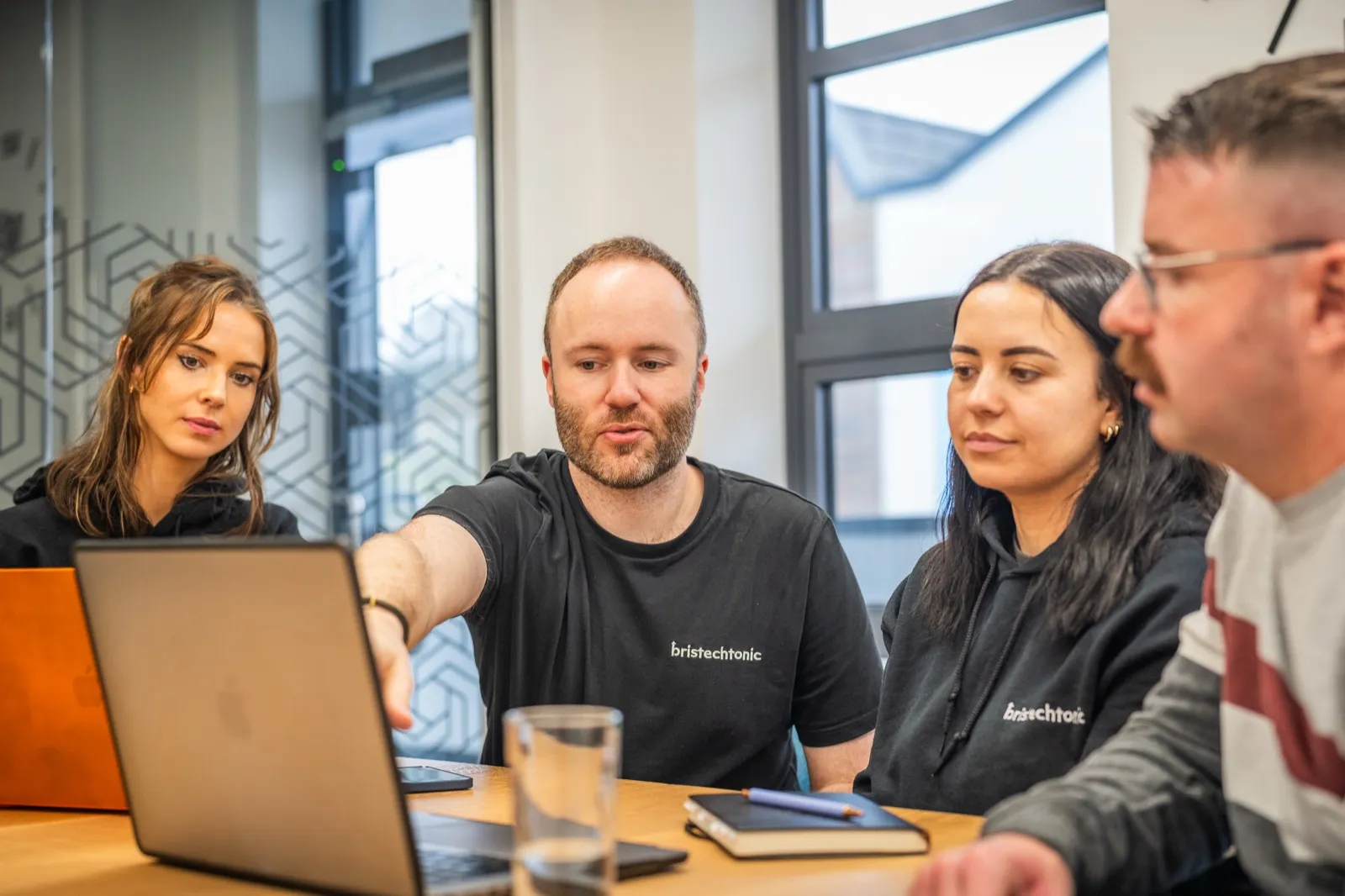
Real people doing the work, and putting their name to it.
You deal with our small, experienced Bristol team directly, from the first call to every monthly report.
Meet the team →What Accessible web design and WCAG audits puts on your desk.
Are we the right fit for you?
Thinking of switching from another agency?
Moving your Accessible web design and WCAG audits to us is more straightforward than staying somewhere that is not working. You keep everything you already own, we pick up without a gap, and we can run the whole thing for you or work alongside your team and your developers, whatever suits.
A free look first
We review what your current agency has done, tell you straight what is worth keeping and where the quick wins are. No obligation to move.
You keep what's yours
Your site, content, Google Business Profile and analytics stay in your name. We work with what you already have; nothing is held hostage.
A clean handover
We map the work across, set a plain-English baseline in the first few weeks, and carry on from there. No starting from zero, no quiet ranking gap.
Three-month minimum, then rolling monthly on 30 days’ notice. No long lock-in, no exit fees.
Who does the work, and how?
Real accessibility comes from testing with actual people and honest judgement, not from a badge or an automated score, which is why we hold our own builds to high accessibility standards as a matter of course. BrisTechTonic is the trading name of Bryley Ltd, and the person who plans your audit and build is the person who carries it out, an experienced team with years between them, with no account layer passing you to someone cheaper. We would rather show you the honest state of your site than sell you a badge that hides the problems, which is why we open with a free discovery call.
Experienced people, start to finish
The person who audits your site is the person who fixes it. No account managers relaying findings to a back office, and no offshore shop running a scanner and calling it an audit.
Real testing, honest reporting
We test on the assistive technology disabled people actually use and report by WCAG level on what passes and what fails. No overlay widgets, no badges that manufacture false confidence.
We practise what we audit
Accessibility is built into our own standards, not a service we only sell. We hold the sites we build to the same bar we measure yours against, which is why this is a genuine strength rather than a checklist item.
Accessible web design and WCAG audits: common questions.
What is a web accessibility audit?
It is a structured check of how usable your site is for people with disabilities, measured against the recognised accessibility standards (WCAG). A proper check tests real pages using a keyboard, screen readers and real devices, not just an automatic scanner, and reports honestly on what fails, why it matters and what it takes to fix. You get a clear, ranked to-do list, not a simple pass or fail badge, so you can tackle the barriers that shut out the most people first.
Do accessibility overlay widgets make my site compliant?
No, and they often make things worse. Those pop-up accessibility toolbars are a small piece of code that claims to fix accessibility automatically, bolted over problems it cannot actually solve, and they frequently get in the way of the real tools disabled people rely on. Genuine accessibility comes from fixing the layout, the underlying code, the colours and the interactions in the site itself. A toolbar gives false reassurance and, increasingly, brings its own reputation and legal risk. We fix the site, not the symptom.
What is WCAG, and which level do I need?
WCAG stands for the Web Content Accessibility Guidelines, the internationally recognised standard for web accessibility, split into levels A, AA and AAA. AA is the level most people treat as the practical target, and it is what most organisations should aim for. We check and build against these standards and explain honestly where you stand and what reaching your target involves, rather than claiming a level the site does not actually meet.
Is an automated accessibility scan enough?
No. Automatic checkers are handy for catching certain issues quickly, but they spot only a fraction of the problems that really matter, and they cannot judge whether a page truly works for someone using a screen reader or a keyboard. A clean automatic report on an unusable site is worse than none, because it gives false reassurance. Real accessibility is tested by real use, which is how we check your site and how we confirm the fixes.
Why should I care about accessibility beyond doing the right thing?
Because it widens your audience, reduces risk and improves the site for everyone. A large share of any audience lives with an impairment, whether permanent, temporary or situational, and an inaccessible site turns them away. Accessibility is also increasingly a legal and reputational question. And the structure and clarity it demands make a site faster, easier to use and easier for search engines to read, so the work pays back well beyond compliance.
How much does an accessibility audit or accessible build cost?
Audits and engagements start from £1,800, with scope agreed before you commit rather than sold as a fixed package. The right figure depends on the size of the site, how many page types and components it has, and whether you need an audit, remediation or an accessible rebuild. We scope it against what your site actually needs after the free discovery call, so you are paying for real work rather than a badge.
Do you build accessible sites, or only audit existing ones?
Both. We audit existing sites and produce prioritised remediation plans, and we design and build new sites with accessibility built in from the first wireframe, which is always better and cheaper than retrofitting. Because we hold our own builds to high accessibility standards as standard, accessible web design is not a separate premium add-on for us. It is part of how we think a site should be built in the first place.
Book the call, or see the evidence first