
BrisTechTonic is a Bristol SEO agency that helps UK businesses get found on Google, the local map pack and the AI assistants they now ask, like ChatGPT and Perplexity. A headless setup splits the system your team edits content in from the website visitors actually see. Your team publishes through a content tool, while the website itself, usually built with a modern toolkit called Next.js, shows the finished pages. Done well it gives you faster, more secure and more flexible sites, with the same content reusable across your website, an app and AI tools. Done badly it becomes a site that only fills itself in inside the visitor's browser, which hides the content from Google. BrisTechTonic builds these sites so the pages are fully formed on our side first, which means they get found and stay fast. Custom builds start at £1,800, with hosting and management from £100 a month.
Going with this split setup is one of the better decisions a growing site can make, and one of the easiest to get wrong. Separating the content system from the website itself gives you speed, security and the freedom to reuse content across your website, an app and, increasingly, AI tools. But that same split makes it very easy to build a site that only fills itself in inside the visitor's browser, so the first thing Google receives is an empty shell and the content only appears once the browser has done its work. You end up with all the complication and none of the search performance that was supposed to make it worthwhile.
Read the full detail →
The ways it goes wrong are specific and common. A site that leaves everything for the visitor's browser to build, so Google and AI tools are left guessing at content they never actually receive. A content setup so rigid that your team end up pasting raw code into fields, defeating the whole point. Preview and publishing left as an afterthought, so the team that was promised independence still needs a developer for routine changes. A setup chosen for the software company's convenience rather than for how your content is actually read, edited and found. None of these show up in a demo. They surface as a fast, modern-looking site that will not get found and a team that dreads updating it.
We build these sites the other way round. The website is built fully on our side first, usually with Next.js, and we choose the right approach page by page: pages that rarely change are built ahead of time, pages that update regularly are refreshed on a schedule, and the genuinely live parts are built as needed, so every page arrives fully formed and stays fast. Content is set up as tidy, reusable information with a clean way of editing and a working preview. The content tool and the website are joined up properly, so the content system never slows down what reaches the visitor. The result is a site that is a pleasure to edit and built to be found.
This is experienced work by design. Choosing the right content setup, deciding what is done on our side and what is left to the browser, picking the right approach for each page, and joining up a content tool without slowing the site down are judgement calls, not a checklist. Our experienced team has spent years building sites and getting them found, which is why we take on the split-setup builds other agencies called complicated.
A slow, clumsy site leaks the demand you already paid to earn.
These are industry figures, not our own results, and we do not invent numbers. They show why speed and clarity are revenue, not decoration: the traffic is the expensive part, and a slow build spills it. No result is ever guaranteed.
headless CMS websites, broken down.
Server-rendered front end on Next.js →
The website itself is where one of these split-setup sites is won or lost on Google. We build it so the pages are formed fully on our side first, using Next.js, with a clear split between what we do and what the browser does, so pages arrive fully formed and stay light rather than being built in the browser and hiding content from Google.
Content modelling and structured data
We set your content up as tidy, clearly labelled fields rather than blocks of code, so it can be reused across your website, an app and AI tools, and so your team works with sensible inputs. A good content setup is what makes this kind of system a genuine asset instead of just a harder way to edit pages.
Rendering strategy per route
Building pages ahead of time, refreshing them on a schedule, and building them as needed each suit different kinds of content. We choose the right one page by page, based on how often the page changes and how it needs to be found, so marketing pages are built ahead of time and load instantly while live pages stay up to date, instead of one blanket approach that compromises both.
Editing workflow and preview
The reason to use this setup is that your team can publish without a developer. We set up a preview, sensible labelled fields and a straightforward way of publishing so editing is genuinely easy, not a split setup that is powerful for developers and awkward for the people who actually use it.
Speed and performance →
A split setup only pays off if the website is fast. We serve ready-made pages, keep the code lean and use the toolkit's own built-in tools for images and fonts, so page speed holds up once the site is full of real content rather than collapsing once it is populated.
Replatforming to headless without losing rankings
Moving to this kind of setup is where traffic disappears if the web addresses and redirects are handled badly. We move it behind a full list of old-to-new addresses, keep the pages that already earn, and check that Google can still read and find everything, so the rankings you have carry over to the new setup.
Book a free discovery call before you spend a thing
What clients say about working with us.
“I've had the pleasure of working with Chris on several SEO projects for my websites in the health field. He was definitely been able to demystify things so that I felt able to make decisions with him and feel confident they were the right ones. For a non-techie, that is worth gold! I look forward to working with Chris again and warmly recommend him to anyone who - like me - is unsure about all things SEO.”
“I was recommended by my branding partner to use Chris and his team last year. I can’t recommend them highly enough. They are very responsive , easy to communicate with and great at translating techy stuff when needed. They are now an essential part of my business model”
“We've been working closely with Chris, Hannah and the team for over 12 months now. As a small company with ambitious growth plans, it was incredibly important that we made the right choice on who to trust with our SEO. 18 months later, we're totally thrilled with our experience so far and our growing online presence within our market. We'd happily recommend BTT and their services to other SMEs. Drop them an enquiry!”
Real people on your account, not a faceless agency.
You work directly with the senior people who do the work, a small Bristol team you will actually get to know, not a call centre or an account manager relaying messages.
Meet the team →






The way we run headless CMS websites.
Scope the content and the search
We start from how your content behaves and how you need to be found: what rarely changes, what updates on a regular basis, what is genuinely live, and the search terms and AI tools that should send you traffic. The content setup and how each page is built are designed around that, not chosen by default.
Model the content, not just the pages
We design a tidy content setup built for reuse and for your team, so the same content can feed your website, an app and AI tools and your team works with sensible labelled fields rather than fighting a rigid template.
Build the front end server-first and fast
Hand-built on Next.js, with the right approach chosen for each page, a clear split between what we do and what the browser does, clean code, and the extra behind-the-scenes details built into the layout, so pages arrive fully formed and load fast from launch rather than being patched up later.
Integrate the CMS and preview cleanly
The content tool and the website joined up properly, with a working preview and a clean way of working, so your team get their independence without the content system slowing the site down or breaking the way pages are built.
Migrate and launch without losing rankings
If you are moving off an older setup, we launch behind a full list of old-to-new web addresses, keep the addresses that already earn, and check that Google can still read and find everything, so the traffic and rankings you already have carry over.
Host, monitor and hold performance
Hosted and looked after on our own platform where it is our build, kept fast, secure and healthy as the content grows and your team publishes.
How do we approach headless CMS websites?
Decoupled, but still server-rendered
This split setup does not have to mean the page fills itself in only inside the visitor's browser. We build the pages fully on our side first, so Google and AI tools receive your content straight away instead of a blank shell. That is the difference between one of these sites that gets found and one that quietly does not.
Content structured to be reused
We set your content up as tidy, well-organised information rather than blocks of code, so the same content can feed your website, an app and AI tools, and so your team edits sensible, clearly labelled fields instead of fighting a rigid template.
Fast because the architecture is right
We build most pages ahead of time and serve them ready-made from servers close to your visitors, so pages load fast and hold up under real traffic, rather than making the visitor's browser build everything and undoing the whole reason you went with this setup.
An editing experience your team will actually use
The whole point of a content system is that your team can publish without a developer. We set up a preview, sensible labelled fields and a clean way of working so editing is genuinely easy, not a split setup that is powerful for developers and painful for everyone else.
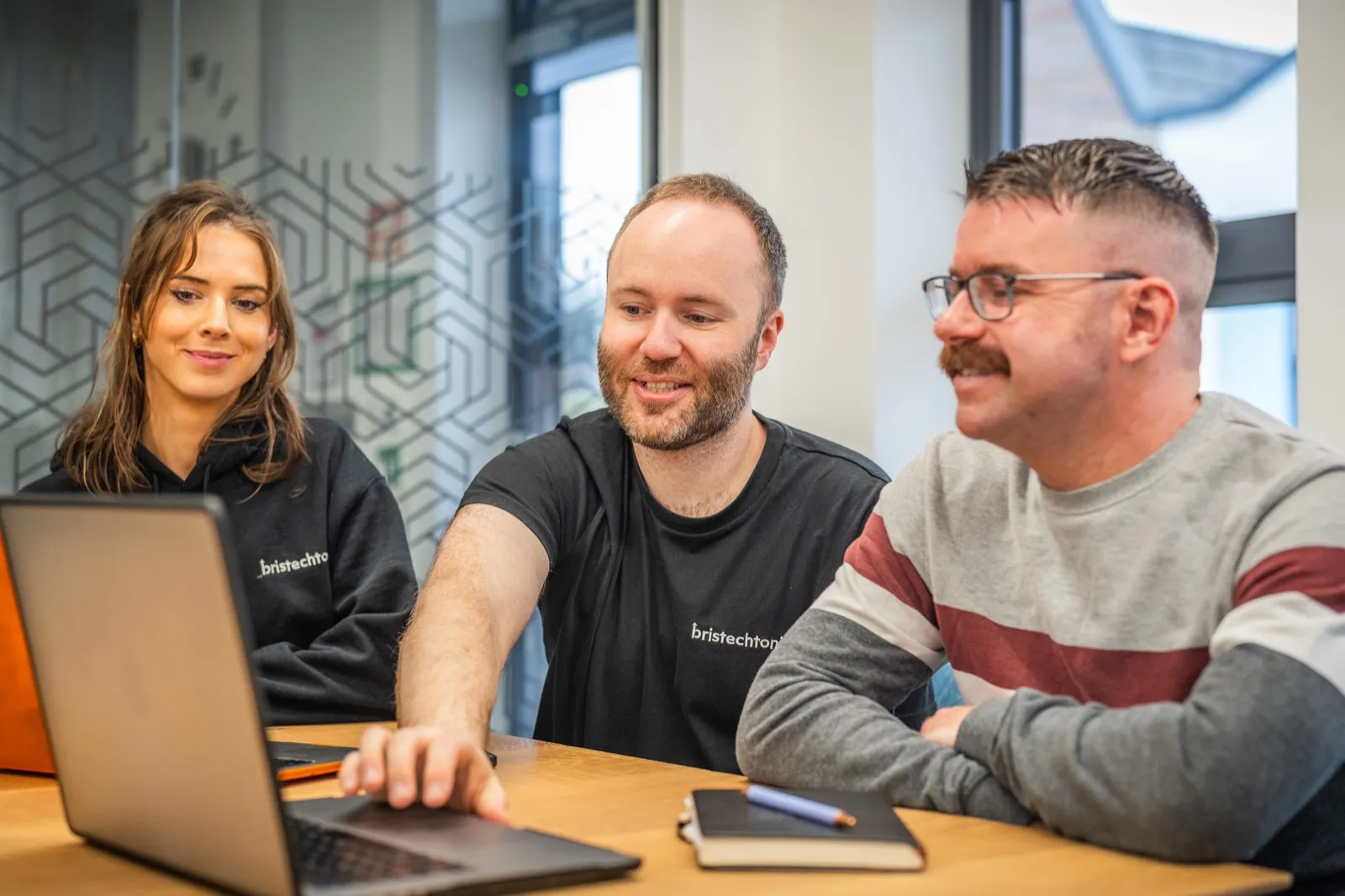
Real people doing the work, and putting their name to it.
You deal with our small, experienced Bristol team directly, from the first call to every monthly report.
Meet the team →What headless CMS websites puts on your desk.
Are we the right fit for you?
Thinking of switching from another agency?
Moving your headless CMS websites to us is more straightforward than staying somewhere that is not working. You keep everything you already own, we pick up without a gap, and we can run the whole thing for you or work alongside your team and your developers, whatever suits.
A free look first
We review what your current agency has done, tell you straight what is worth keeping and where the quick wins are. No obligation to move.
You keep what's yours
Your site, content, Google Business Profile and analytics stay in your name. We work with what you already have; nothing is held hostage.
A clean handover
We map the work across, set a plain-English baseline in the first few weeks, and carry on from there. No starting from zero, no quiet ranking gap.
Three-month minimum, then rolling monthly on 30 days’ notice. No long lock-in, no exit fees.
Who builds your headless site, and how?
A headless build can be brilliant or a search disaster, depending on who assembles it. BrisTechTonic is the trading name of Bryley Ltd, a team of experienced people with years of experience between them, and yours is planned, designed and built by the people who have done it before and who also do the SEO, so the website is built the way Google needs to read it, not the way a software demo shows it. We are honest about what we do and do not take on.
Experienced hands on the architecture
How the content is set up, what is done on our side versus in the browser, how each page is built, and how the content tool is joined up, are all judgement calls that decide whether one of these sites works, so they sit with experienced people rather than a checklist run on autopilot.
Built by people who also rank sites
We build the website and we do the behind-the-scenes SEO, so it is built to serve content Google can read and to load fast, not just to pass a technical review. With this kind of setup, the two are the same conversation.
Honest about whether headless is right
This kind of setup is powerful and it is also overkill for many sites. Where a simpler build would serve you better, we will say so plainly rather than selling you complexity you do not need and cannot easily maintain.
headless CMS websites: common questions.
What is a headless CMS website?
It is a site where the system your team edits content in is kept separate from the website people see. Your team publishes through a content tool, and the website itself, usually built with a modern toolkit called Next.js, shows the finished pages. The upside is speed, security and content you can reuse across your website, an app and AI tools. The risk is a site built to fill itself in inside the visitor's browser, which hides content from Google, so we build the pages fully on our side first.
Is a headless CMS good or bad for SEO?
It is good when the pages are formed fully on our side, and bad when they are not. This kind of setup makes it easy to build a site that fills itself in inside the visitor's browser, so Google first receives an empty shell, which quietly kills rankings. We build the pages fully on our side first, so your content is readable straight away, which is exactly what Google and AI tools need.
Do we need to go headless at all?
Often, no. This kind of setup earns its place when you have a lot of content, several places to publish it, or a real need for the flexibility, and it is overkill for a straightforward marketing site. We will tell you plainly whether the extra complexity is worth it for you rather than selling you a setup you do not need and will find harder to maintain.
Will our team be able to edit the site easily?
Yes, that is the point of doing it well. We set content up as tidy, labelled fields, add a working preview and design a sensible way of publishing, so your team can publish without a developer. A setup that is powerful for developers and painful for the people editing it is one built wrong, and we build for the people who actually use it.
Can you replatform our existing site to headless without losing rankings?
Yes. Moving to this kind of setup is where traffic vanishes if the web addresses and redirects are handled badly, so we move it behind a full list of old-to-new addresses, keep the pages that already earn, and check that Google can still read and find everything before and after launch, so the rankings and traffic you have carry across to the new setup.
Book the call, or see the evidence first